
Scotch Peppers.
Growing Scotch Bonnet Peppers on a Jamaican Farmstead

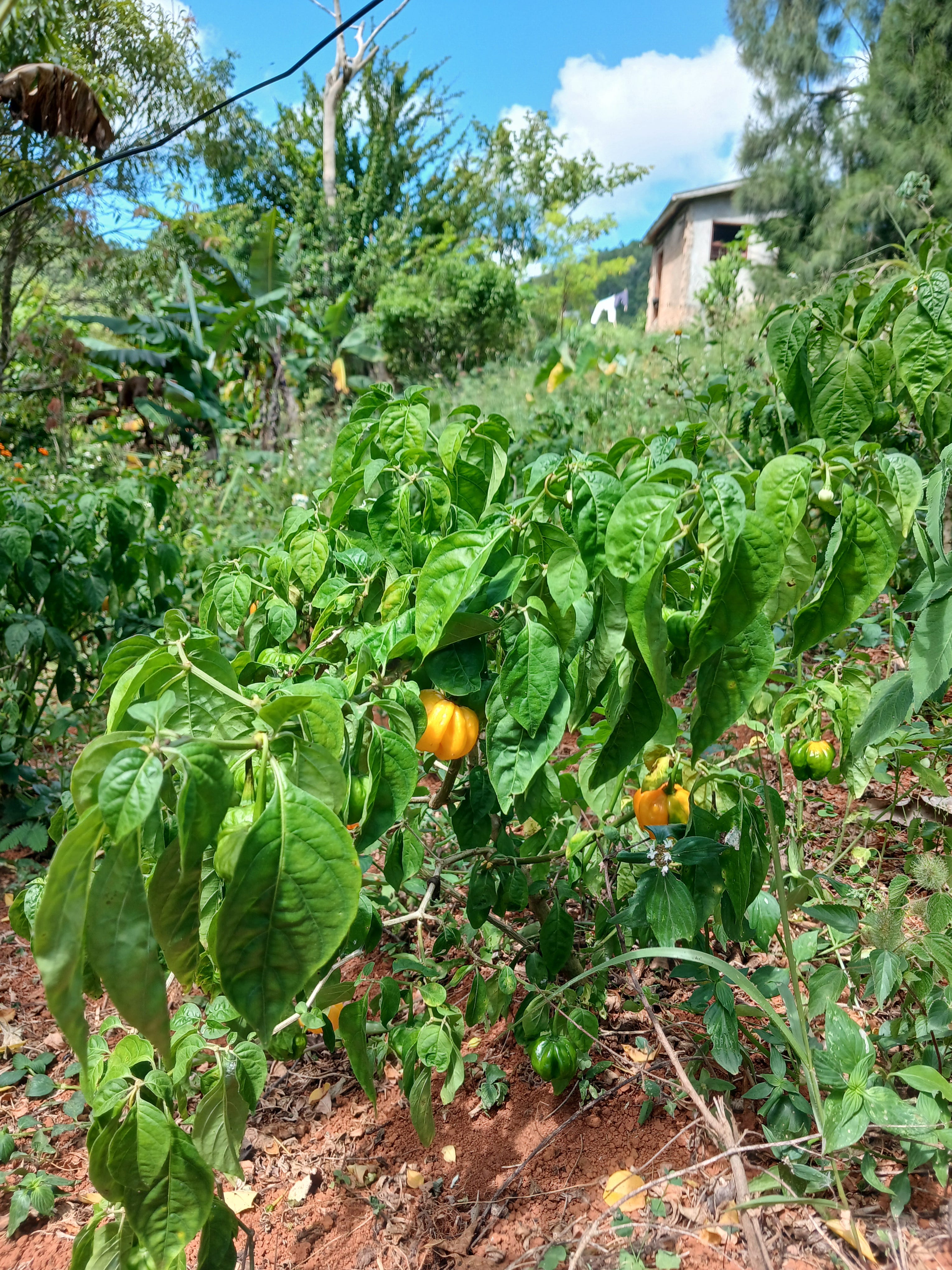
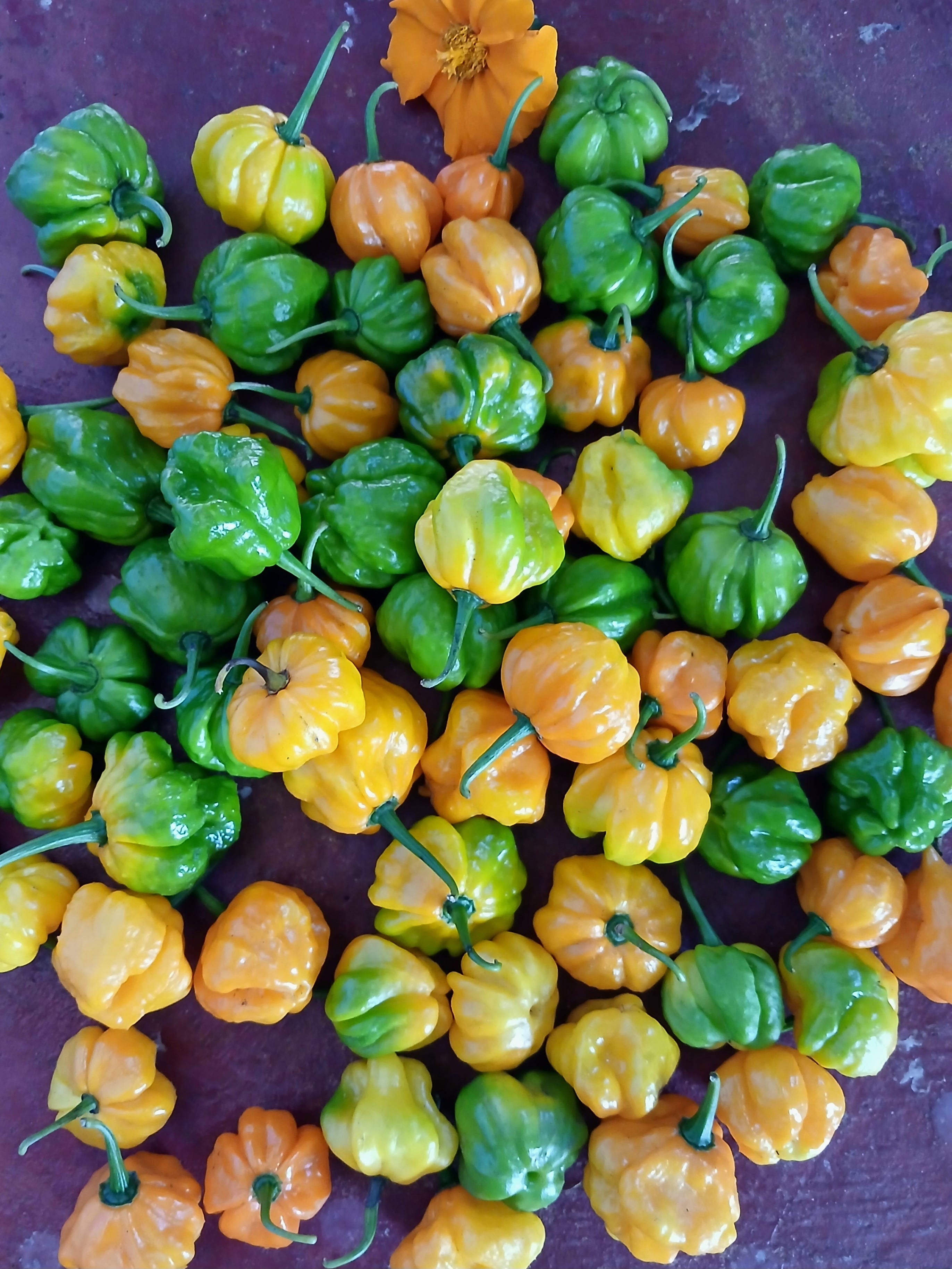
On many Jamaican farms/farmsteads, the Scotch bonnet pepper has earned its place not just as a kitchen staple, but as one of the most reliable and rewarding crops to grow.
In soils that are rich in iron ~those deep red earths that become dense and sticky when the rains come~ this pepper continues to show resilience, productivity, and cultural importance.
Scotch bonnet pepper is more than just heat. It is character, aroma, and identity woven into the land and the plate.
Why Scotch Bonnet Thrives in Jamaica’s Red, Clay-Forming Soil
Jamaica’s red soils ~often high in iron oxides and rich volcanic minerals~ can behave like two worlds: crumbly and workable when dry, but heavy and compact when saturated. Yet Scotch bonnet peppers tend to perform well in these conditions for a few key reasons:
1. Deep rooting and adaptability
Scotch bonnet plants develop strong root systems that can push into compacted layers when given time. Even in heavier soils, they adapt if the land is well-prepared with organic matter like compost or manure.
2. Nutrient-rich soil profile
Those red soils often contain iron, magnesium, and trace minerals that support strong vegetative growth. When balanced with organic matter, the soil becomes a slow-release nutrient bank for steady fruiting.
3. Stress improves fruit quality
Mild environmental stress ~like periodic drying followed by rainfall~ can actually increase capsaicin levels (the compound responsible for heat). This is one reason Scotch bonnets grown in challenging soils often develop stronger flavour and heat profiles.
4. Drainage patterns in farm plots
Even when soil becomes clay-like, many Jamaican farmsteads are on sloped or semi-upland terrain. This natural drainage prevents long-term waterlogging, which peppers dislike, while still holding enough moisture during dry spells.
5. Sun + heat synergy
Scotch bonnet peppers thrive in warm, sun-heavy environments. Jamaica’s consistent tropical sun helps balance the heavier soil structure by accelerating growth cycles and fruit development.
Why Scotch Bonnet Became a Core Part of Jamaican Cuisine
In Jamaican cooking, Scotch bonnet isn’t optional ~it is foundational. It is part of the “base note” of flavour that defines everything from everyday meals to ceremonial dishes.
Historically, the pepper became embedded in the food culture because:
• It was easy to grow in backyard plots and farmsteads
•It stored well when dried or preserved in sauces
• It paired naturally with local ingredients like thyme, scallion, garlic, and allspice
• It provided strong flavour without needing large quantities of meat or seasoning imports
Over time, it became central to dishes like jerk, soups, stews, and rice dishes.
The heat is not just about spice ~it is about depth. It opens the palate, enhances aromatics, and gives food its unmistakable Jamaican identity.
Have You Tried Scotch Bonnet in Its Natural Form or Processed into a Product?
It can be enjoyed in many forms beyond the raw pod:
Fresh (crushed, sliced, or whole in cooking)
Fermented into pepper sauces
Blended into marinades and jerk pastes
Dried and stored for long-term seasoning
Infused into oils or vinegars for deeper flavour extraction
Each method changes how the heat expresses itself ~sometimes sharp and immediate, sometimes slow and building, sometimes soft and aromatic.
Supporting Our Rooted Nourishment Family
If you found value in this post, in this publication, and in our continued family movement under the brand “Di Rooted Journey” (also here on Substack), we invite you to walk with us in support.
We are a subsistence farming family building from the ground up in Jamaica ~working with the land, learning as we grow, and navigating the realities of a developing system and wider socioeconomic landscape without a fixed salary or stable monthly income.
In this kind of life, digital support ~through donations, tips, and gifts~ becomes more than just financial help. It becomes part of the soil that helps this work continue to grow. It supports our ability to access nourishing food ingredients, essential tools, and farming resources as we gradually develop our farmstead life in rural Jamaica.
If you feel led to support this journey, you can donate here: Ko-fi (Rooted Nourishment Food Fund)
Thank you for reading, for sharing space with our story, and for being part of this growing root system of food, family, and land.